Cinque Terre in October: What Changes in Shoulder Season
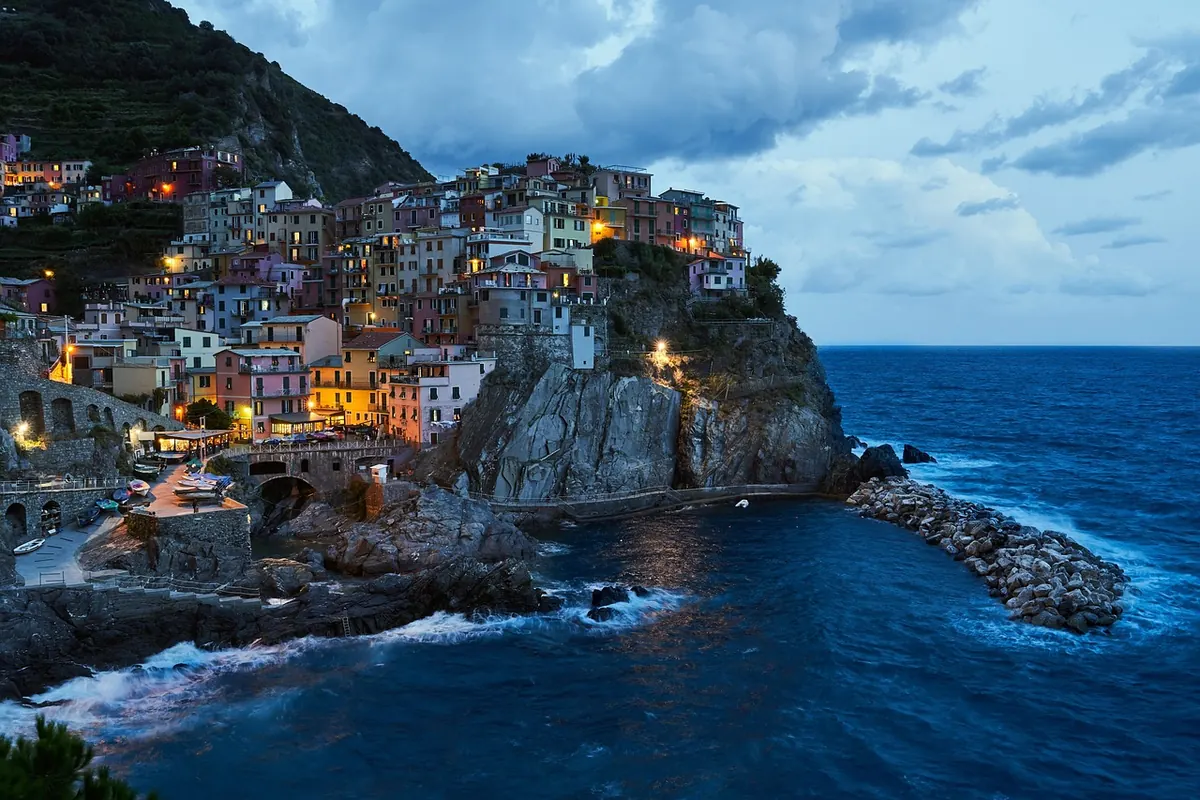
By October the Cinque Terre has already exhaled. The ferries still run, the vineyards above Manarola are still combed into neat green lines, and the sea is often warm enough for a proper swim. But the rhythm has changed: the boats come less often, the coastal path may be shut for repairs, and a single rainy Tuesday can rearrange your week. October is a wonderful month here, provided you stop treating the villages as a beach destination and start treating them as a place with weather.
The Weather Is a Different Bargain
September still behaves like summer. October is the hinge month. Mornings can be cool enough for a jacket, midday sun can push you into the shade, and evenings arrive early — sunset swings from around seven in the first days to well before five by the end. Italians have a word for the good part, ottobrata: those clear, golden spells of October warmth that make the terraces glow and the water look almost indecently blue.
Then there is the other October. Liguria takes its rain in concentrated bursts, and a single night of heavy downpour can turn a stone staircase into a stream. That same rain is what keeps the terraces alive — and it is also what occasionally takes them away, which is why trail status matters so much here.
Pack for three seasons in one bag: a light waterproof with a hood, a warm mid-layer, and shoes with real grip. Check the forecast on the morning you plan to walk, not three days ahead. The regional weather service for Liguria (ARPAL) and the national civil protection bulletins are the ones locals glance at, and they are more useful than a generic forecast app.
Trails Close for Maintenance, Not Just for Winter
The famous coastal route, the Sentiero Azzurro, is a living piece of infrastructure hacked into a cliff. Sections close regularly — landslides, erosion, stabilisation work — and autumn is when the planned maintenance often happens, after the summer crowds have gone. That means an October visit can actually hit more closures than June, not fewer.
Two habits save the trip. First, check the Cinque Terre National Park website and the info points at each station the day before and again in the morning; the situation changes. Second, treat the Via dell'Amore between Manarola and Riomaggiore with caution. After years of closure it has reopened in phases with its own access rules, so confirm its current status rather than assuming.
Here is what the classic coastal sections look like when they are open:
- Monterosso to Vernavazza — the hardest of the four, roughly two hours of steps and switchbacks. Start early, before the sun hits the exposed stretches.
- Vernazza to Corniglia — about ninety minutes through olive groves and terraces, with views back over Vernazza that justify the climb.
- Corniglia to Manarola — the shortest and gentlest of the paid sections, under an hour, and a sensible choice on a day with a doubtful forecast.
- Manarola to Riomaggiore — the short paved Via dell'Amore, subject to its own booking or access rules.
When the coastal path shuts, the sanctuary trails above the villages usually stay walkable — they are steeper, quieter and often muddier, and they reward you with the sound of church bells coming up through the chestnut trees. You need the Cinque Terre Card for the paid coastal sections; buy it online or at the station offices and keep it on your phone. After rain, poles are not vanity: the stone steps get slick, and the descents are where knees complain.
Ferries Run Less and Cancel More
The ferry season along this coast runs from roughly late March to early November, so October sits at the tail end. Timetables thin out: fewer crossings, sometimes only a handful each day between Monterosso and Riomaggiore, fewer still heading down to Porto Venere. Note that Corniglia has no landing at all — it sits on a promontory, and the boat cannot reach it.
Wind is the other factor. A swell from the south-west will suspend service with little notice, and nobody argues with the harbourmaster. Check the ferry operator's site or the ticket desk the evening before, and build the boat trip into your plan as a pleasure rather than a transport backbone. The train is the reliable spine: frequent, quick between villages, and easy to buy on an app or from the machines. Validate paper tickets.
When the boats do sail, October is the best time to be on one. The top deck is not a scrum, and the view of Corniglia and Manarola stacked above the water is the single best photograph you will take all week.
The Crowds Thin Out, With Two Exceptions
Compare the second half of October with August and the difference is not subtle. You can find a bench in Vernazza's square. You can walk into a bakery in Corniglia without queueing. Accommodation softens, and the people running the shops have time to talk to you.
Two things still fill the villages: weekends, when Italian day-trippers arrive in numbers, and any long weekend or public holiday. Cruise ships also call at La Spezia into the autumn, and a ship day can pack Monterosso and Vernazza for a concentrated few hours around midday. The counter-move is simple — walk early, start by eight, and be back in the villages in the late afternoon when the day visitors have gone. Staying overnight is the single biggest lever you have. Day-trippers see the Cinque Terre at its most crowded; guests see it at breakfast.
Harvest Work and What's Still Open
The Sciacchetrà grapes on the terraces above Manarola and Riogiorre are usually picked in September, so by October the pressing is done and the work shifts to wall repairs and the olive harvest later in the season. It is a good month to eat: menus turn toward porcini, chestnuts and squash, the sea still gives up anchovies and squid, and the first of the new oil appears toward the end of the month.
Most businesses stay open through October, though a few seasonal places wind down after the first week or so, and quite a lot shut entirely in the deep winter. Book dinner for Friday and Saturday nights rather than assuming you can walk in. If a restaurant has been on your list for years, call ahead.
Practical Notes Before You Book
Give the villages two nights minimum, ideally three, and base yourself in one of them rather than commuting from La Spezia — you want the early morning and the late evening, which are the whole point of the shoulder season. Check trail status and ferry status each morning; treat the weather as a live variable rather than a settled plan. Pack grippy shoes, a rain shell and a small towel if you are travelling in the first half of the month, when the sea still holds its summer warmth.
Always keep a wet-day plan. A forecast of two solid days of rain is not a disaster: Levanto, Porto Venere and Lerici are short hops, and Genoa is under an hour and a half away by train with more arcades than you can walk in a day. If you have booked flights and non-refundable rooms, ordinary travel insurance that covers weather disruption is cheap peace of mind for an autumn trip. And if you are hiking seriously, tell someone your route — phone coverage in the terraces is patchy, and the park's trails are mountain paths, not promenades.
Photo: felix_w / Pixabay